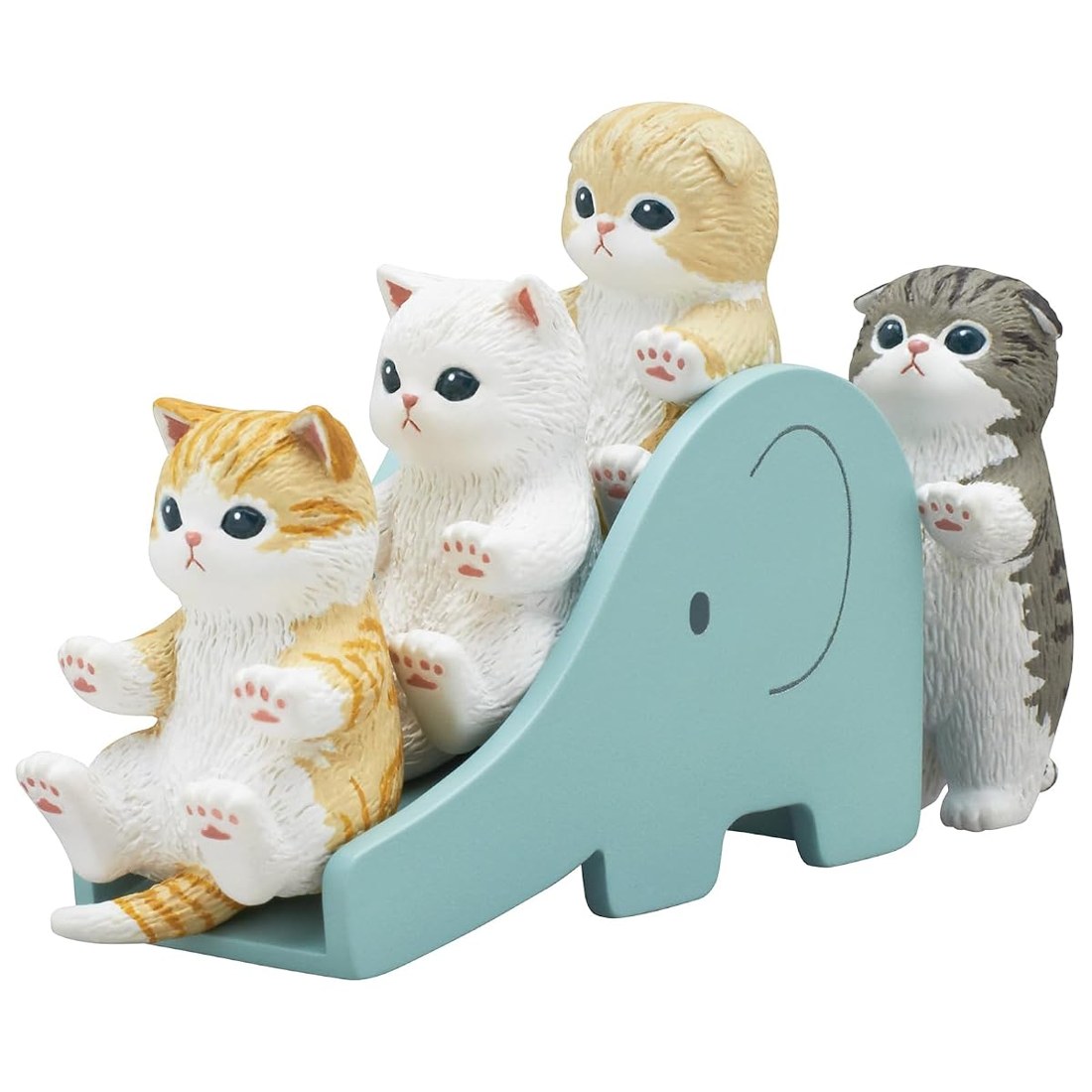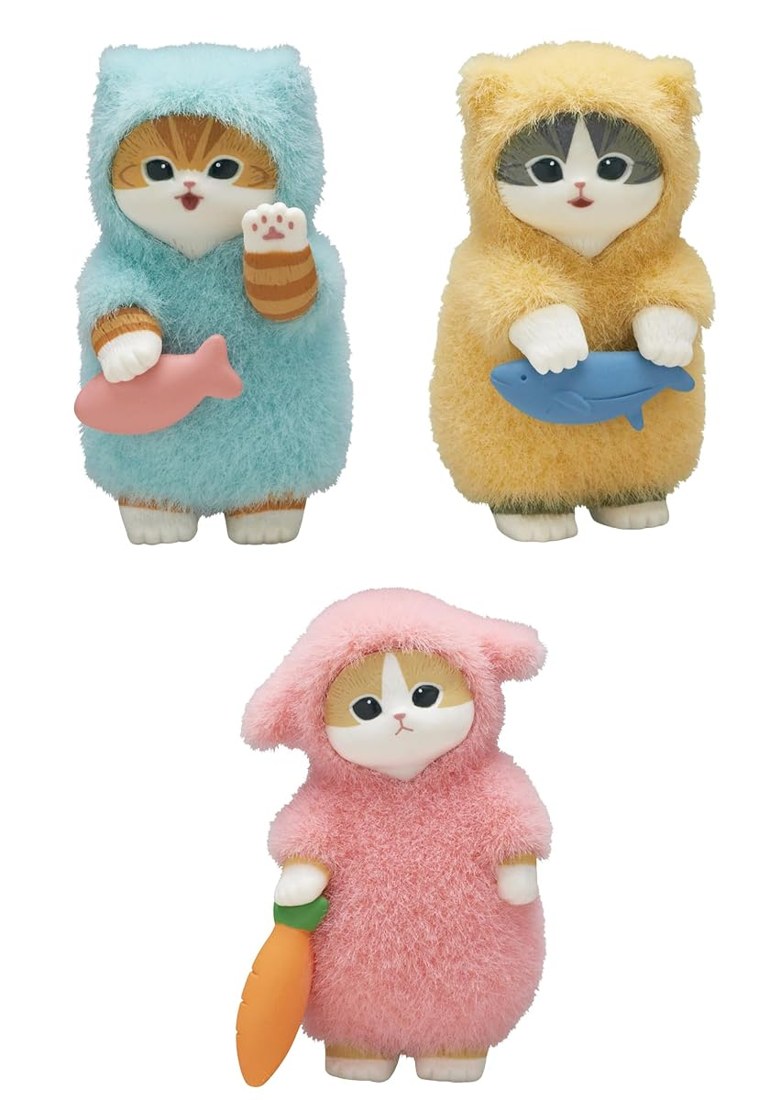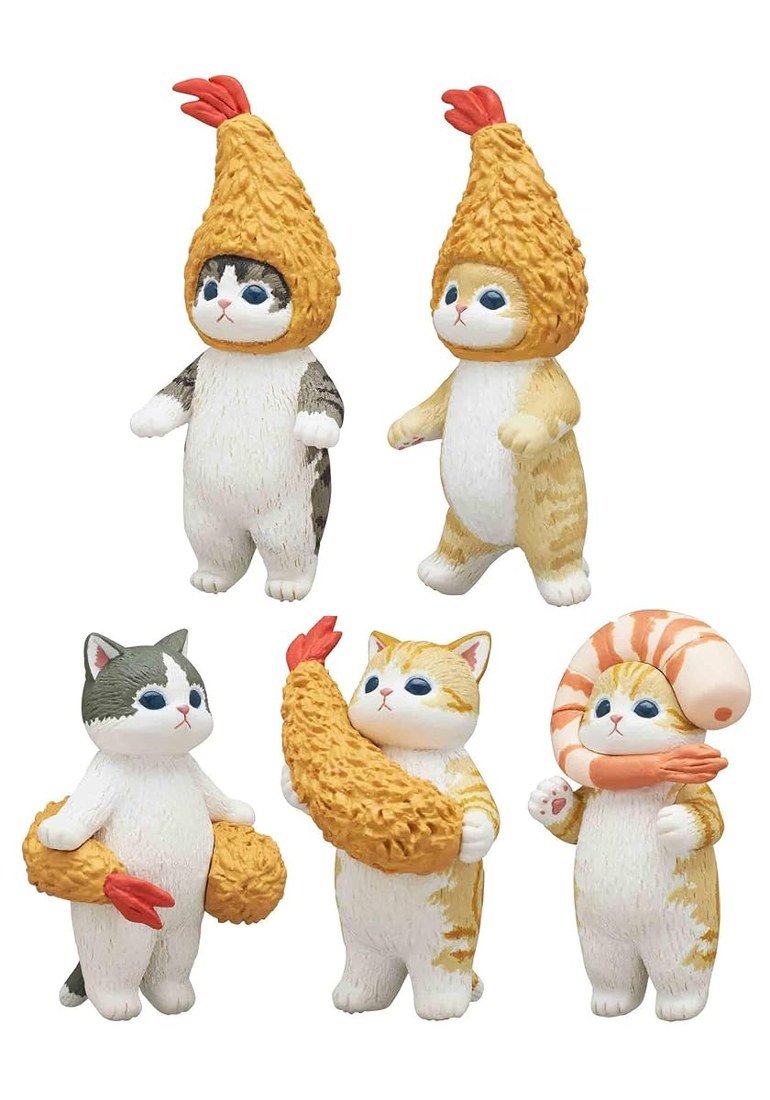
Japanese capsule toys start with a machine. A coin goes in, the dial turns, and a plastic capsule drops into the tray with one figure folded inside. The machines stand in rows outside stations and in arcades, and the rows are why the format looks the way it does.
Scale is decided by the capsule. A standard one is 65 to 75 mm across, so a figure must fold into that volume — which is why a 7 cm cat arrives as a head, a body and a base. Kitan Club designers do not ask how big a piece should be; they ask how it folds.
The line-up is the second rule. One machine holds one series, typically four to eight designs, printed on the header card above the dial. That carried over to the shelf: a Kitan Club blind box is a capsule machine reduced to a single turn.
Materials are mostly PVC and ABS, painted in several passes, occasionally cast in translucent resin. Paint is the expensive part — a face either survives shrinking or it does not, and that single pass of colour on the eyes separates a good capsule toy from a bad one.
We have worked to these limits at Kitan Club for two decades. Capsule or box, the rule is the same: fold it small, keep the line-up coherent, make the joke land at arm's length. Kitan Club collectibles that only work in a product photograph are not finished.
Starting out, buy one blind box from a Kitan Club series you like rather than a sealed case of twelve. A case removes the mechanism, and the mechanism is why the format exists. Trade the doubles and let the dial fill the shelf. Collectibles arrive in the order the machine chooses.